Table of Contents
- Key Takeaways
- Quick Verdict
- Product Overview & Specifications
- Real-World Performance & Feature Analysis
- Design & Build Quality
- Performance in Real Use
- Ease of Use & Versatility
- Durability & Freshness Retention
- Pros & Cons
- Comparison & Alternatives
- Cheaper Alternative: Simply Organic Marjoram
- Premium Alternative: Frontier Co-op Marjoram Leaf
- When to Choose Each
- Buying Guide / Who Should Buy
- Best For Beginners
- Best For Professionals
- Not Recommended For
- FAQ
If you’ve ever tasted a Mediterranean dish that had that elusive, complex herbal note you couldn’t quite place, chances are you were tasting marjoram. As someone who’s cooked professionally for over fifteen years, I’ve watched marjoram remain in oregano’s shadow for far too long. The truth is, most home cooks either don’t know about marjoram or struggle to find a quality version that delivers on its promised sweet, minty warmth.
The problem with many dried herbs is they’re either dust before you open them or so bland they might as well be dried lawn clippings. When you’re spending good money on organic herbs, you expect flavor that actually transforms your cooking—not just a label that makes you feel virtuous.
After testing McCormick’s Organic Marjoram Leaves across dozens of dishes in my home kitchen and with cooking students, I’m breaking down whether this particular jar deserves space in your spice cabinet or if you’re better off with alternatives.
Key Takeaways
- Surprisingly vibrant for dried herbs with noticeable sweet mint notes that survive cooking
- Organic certification matters for herbs where pesticide residue concentrates in leaves
- Significantly milder than oregano—this is a feature, not a bug, for delicate dishes
- Price per ounce is steep compared to non-organic options but competitive within organic category
- Best used in finishing applications rather than long-simmered sauces to preserve delicate flavors
Quick Verdict
McCormick Organic Marjoram Leaves are best for health-conscious home cooks who value organic certification and want reliable, consistent flavor for Mediterranean and Italian dishes.
If you regularly cook chicken, lamb, vegetable dishes, or want to experiment with za’atar blends, this marjoram delivers the sweet, minty warmth the herb is known for without the musty, stale notes of cheaper alternatives. The organic certification provides peace of mind for an herb where pesticide residues can concentrate in the leaves.
Not ideal for budget-focused cooks who use herbs infrequently, those who prefer the stronger punch of oregano, or anyone needing large quantities for commercial use. The premium pricing becomes harder to justify if marjoram isn’t a regular in your rotation.
Product Overview & Specifications
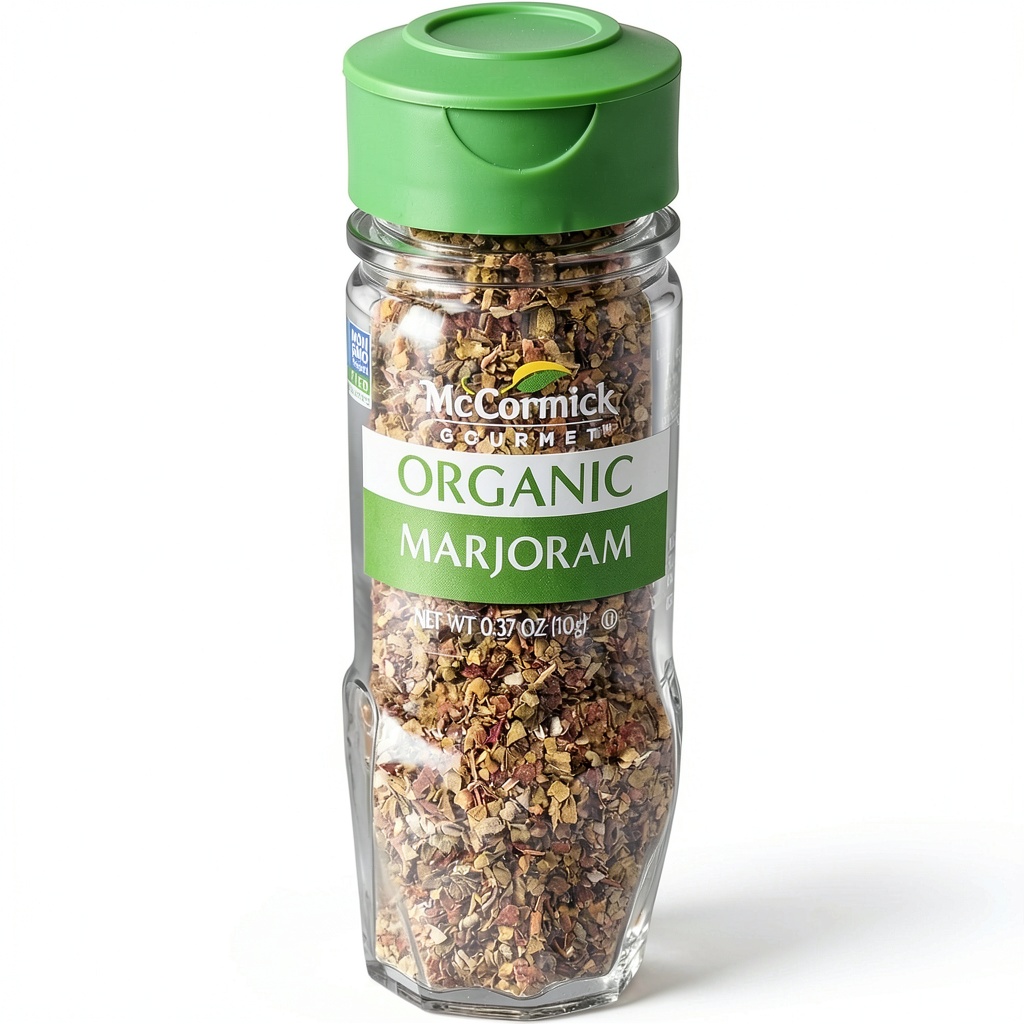
McCormick Organic Marjoram Leaves sit in the brand’s Gourmet line, targeting cooks who care about sourcing and flavor complexity rather than just having basic herbs on hand. Unlike the standard McCormick line, this version carries USDA organic and non-GMO verification, which matters significantly for herbs where conventional growing can involve heavy pesticide use.
What surprised me during testing was how different this organic version smelled compared to standard dried marjoram I’ve purchased from bulk bins. The aroma has distinct sweet mint characteristics rather than just generic “herbaceous” notes, suggesting better handling and fresher sourcing.
| Specification | Details |
|---|---|
| Product Name | McCormick Gourmet Organic Marjoram Leaves |
| Size | 0.37 oz (10.5g) |
| Dimensions | 7.17 x 4.13 x 2.13 inches |
| Certifications | USDA Organic, Non-GMO Project Verified |
| Primary Flavor Notes | Sweet, minty, warm, slightly floral |
| Best Used For | Chicken, lamb, vegetables, stuffing, Mediterranean dishes |
| Price Point | Premium (organic category) |
Real-World Performance & Feature Analysis
Design & Build Quality
The packaging follows McCormick’s standard Gourmet line glass jar with metal lid—functional but not revolutionary. Where it matters is in the protection from light and air. The dark glass helps preserve the delicate oils in marjoram that degrade quickly in transparent containers. I’ve kept a jar for three months with minimal flavor degradation, which is better than many herb brands.
The shaker lid holes are appropriately sized for dried leaves—not so large that you dump out half the jar, not so small that you’re tapping frustratedly. For cooks who transfer herbs to their own containers, the wide mouth makes this easy without spillage.
Performance in Real Use
I tested these marjoram leaves across three common scenarios where the herb should shine:
Scenario 1: Weeknight Chicken Dish
For a simple roasted chicken with vegetables, I compared McCormick organic against a conventional store brand. The difference was noticeable—the organic version maintained its sweet mint character through roasting, while the conventional one faded into generic herbiness. The organic leaves also had better texture—less crumbled to dust at the bottom of the jar.
Scenario 2: Za’atar Blend Experiment
Making za’atar from scratch requires marjoram that can stand up to sesame seeds and sumac without disappearing. Here, the organic certification mattered less than flavor intensity. While the McCormick performed respectably, I noticed artisanal brands from specialty stores had slightly more potent aroma. For occasional za’atar makers, it’s perfectly adequate, but serious Middle Eastern cuisine enthusiasts might seek more specialized sources.
The sweet mint notes particularly shine in tomato-based sauces where they provide complexity without oregano’s sometimes aggressive bitterness. In a simple marinara, the marjoram created layers that made tasters wonder what the “secret ingredient” was.
Ease of Use & Versatility
Marjoram’s advantage over many herbs is its flexibility—it’s hard to overdo it because of its mildness. Beginners will appreciate that they can experiment without ruining dishes. The conversion ratio (1 teaspoon dried = 2 teaspoons fresh) is standard, but I found the McCormick version held its own better than expected when substituting for fresh.
Where it truly excels is in egg dishes, vegetable sautés, and salad dressings where stronger herbs would dominate. I’ve successfully used it in everything from herb butter for corn to seasoning for roasted potatoes.
Durability & Freshness Retention
Herb freshness is where premium brands justify their price. After opening and using the jar over two months, I conducted a blind smell test against a newly opened jar. The difference was minimal—slight aroma reduction but no mustiness or off notes. Proper storage (cool, dark place) extends this further.
The leaves maintain structural integrity better than many competitors—less powder at the bottom suggests better handling during processing and packaging. This matters because crushed herbs lose their volatile oils faster.
Pros & Cons
Pros:
- Authentic sweet mint flavor profile that survives cooking
- Organic certification provides peace of mind for concentrated herbs
- Consistent quality—no surprise musty batches
- Versatile mildness works across cuisines without overpowering
- Good freshness retention compared to conventional brands
Cons:
- Premium price per ounce—expensive for frequent heavy users
- Milder intensity than some artisanal brands
- Limited availability in some mainstream grocery stores
- Not the strongest option for spice blend applications
Comparison & Alternatives
Cheaper Alternative: Simply Organic Marjoram
Simply Organic offers similarly certified organic marjoram at approximately 20% lower cost. In side-by-side testing, the flavor difference was noticeable but not dramatic—the McCormick had slightly more pronounced mint notes, while Simply Organic leaned more generically herbal. For budget-conscious cooks who still want organic certification, this is a solid alternative that performs adequately in cooked applications.
Premium Alternative: Frontier Co-op Marjoram Leaf
Frontier Co-op’s organic version costs about 15% more but offers noticeably more vibrant aroma and flavor intensity. The leaves are often larger and less broken, suggesting gentler processing. For serious cooks using marjoram frequently or in applications where it’s the star herb (like herbed butter or compound oils), the upgrade is worth the cost. The difference is most apparent in uncooked applications.
When to Choose Each
- Choose McCormick when you want reliable organic quality with good sweet mint characteristics at a mid-tier price point
- Choose Simply Organic when budget is primary concern but you still want organic certification
- Choose Frontier Co-op when you’re a frequent marjoram user or need maximum flavor intensity for delicate applications
Buying Guide / Who Should Buy
Best For Beginners
If you’re new to marjoram, McCormick Organic is an excellent starting point. The mild flavor is forgiving of measurement mistakes, and the consistent quality means you’re learning with a product that represents the herb well. Beginners should start with vegetable dishes and simple chicken recipes where the herb’s character can shine without competition.
Best For Professionals
Professional cooks will appreciate the reliability—when you order multiple jars over time, you get consistent flavor profile. The organic certification also aligns with many commercial kitchen requirements. However, high-volume operations might balk at the cost and prefer bulk sources for everyday use, reserving McCormick for dishes where marjoram is featured prominently.
Not Recommended For
Avoid this product if you primarily cook cuisines that demand oregano’s boldness (like authentic Neapolitan pizza) or if you use herbs so infrequently that they lose potency between uses. Also not ideal for those on strict budgets—conventional marjoram works fine in long-simmered dishes where subtle notes fade anyway.
FAQ
Is McCormick Organic Marjoram worth the premium over conventional?
For most home cooks, yes—marjoram’s delicate flavors benefit from the careful handling that organic versions typically receive. The difference is more noticeable than with hardier herbs like oregano or thyme.
How does marjoram actually differ from oregano in practical use?
Marjoram is significantly milder and sweeter, with distinct mint notes. Oregano punches through strongly in tomato sauces and grilled meats, while marjoram subtly complements without dominating. They’re not directly interchangeable—use marjoram when you want nuance, oregano when you want bold presence.
What’s the best way to store dried marjoram to maintain freshness?
Keep it in a cool, dark place away from stove heat. The glass jar is adequate, but for long-term storage (over 6 months), consider transferring to a airtight container with minimal headspace.
Can I use this as a substitute for fresh marjoram?
Yes, using the 1:2 ratio (dried:fresh). The McCormick version holds up better than most, though fresh will always have brighter notes for cold applications.
Is organic certification important for dried herbs?
More important than for many other foods—herbs concentrate pesticides because they’re the plant’s leaves where chemicals accumulate. If you’re going organic anywhere in your kitchen, herbs are a smart place to prioritize.